
Lesson 2 of 8 · Lesson menu
BEGINNER LEARNING PATH
LESSON 2 OF 8
Understand your customer.
Start with their needs.
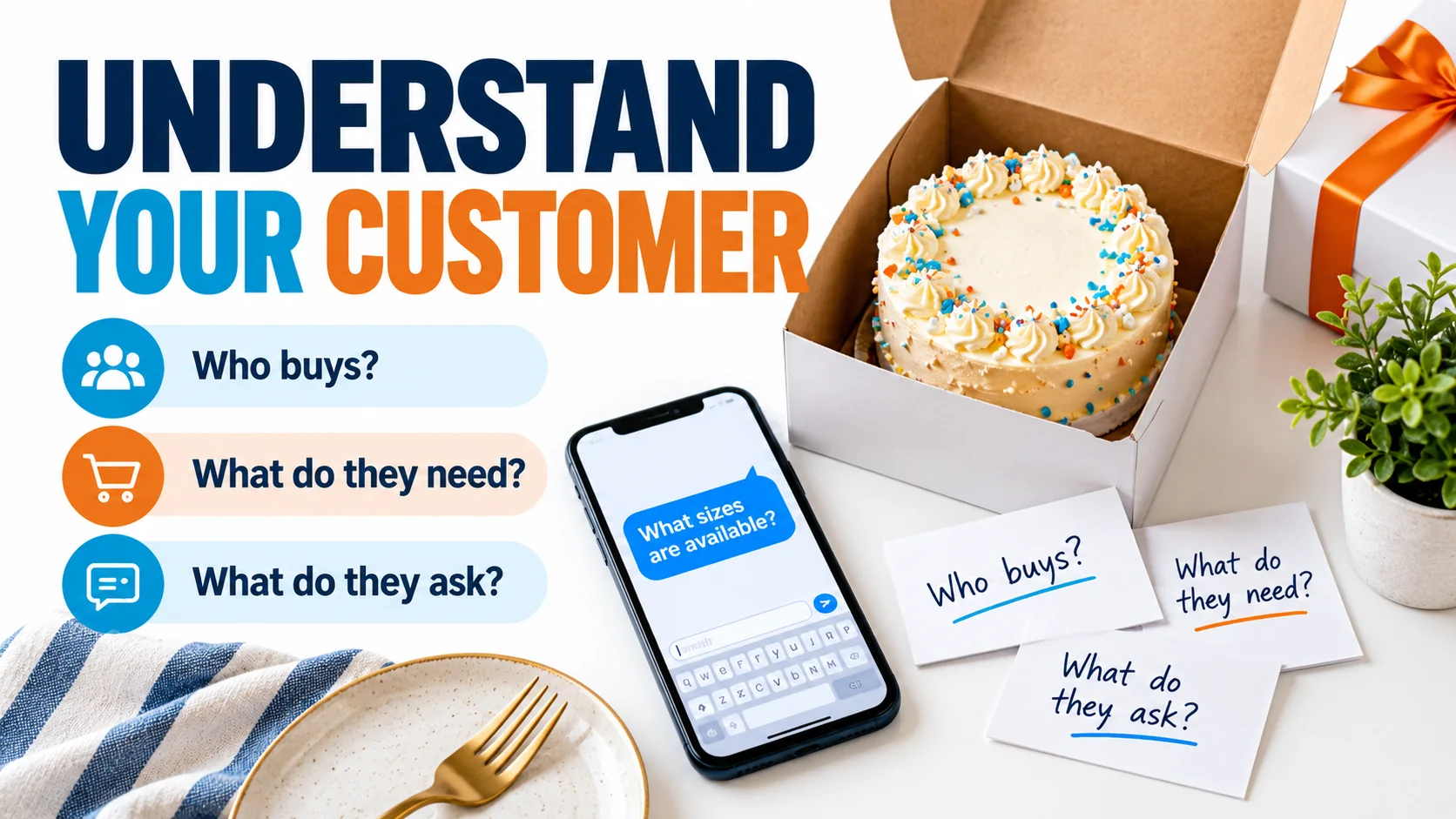
Who buys? What do they need? Why do they choose one business over another? Let’s make it simple.
Topics in this lesson
Topic 1 · The customer
Who is a customer?
A customer is a person or business that buys a product or service. The person who pays and the person who uses it may be different.
A parent buys a cake.
The parent asks about the price and places the order.
The child enjoys the birthday.
The child may choose the design. The parent may decide the size and budget.
Both people can matter. A useful message helps the buyer decide and explains what the person using the product will get.
Is everyone who sees a post a customer?
No. Someone may see a post without being interested. Another person may ask a question but not buy. Do not count every viewer as a customer.
Topic 2 · Their need
What do they actually need?
A product is what someone buys. A need is what they want help with.
A birthday cake
This is the item being sold.
Celebrate a birthday
This is what the buyer wants to do.
Will it be ready?
This may be one thing they need to know before ordering.
A cake photo shows the design. Clear details about size, price and collection time help a person decide whether to order.
Different customers may need different things. Learn what matters to them instead of guessing.
Topic 3 · Why they choose
Why do people choose a business?
Price can matter. So can timing, location, quality and trust. A person may compare several of these before buying.
Choose an example to see how the questions change.
Choosing a birthday cake
- The need
- A cake for a birthday on Sunday.
- The questions
- What sizes are available? What is the price? Can it be ready on time?
- Useful details
- Cake sizes, prices, design choices and collection arrangements.
These are possible questions, not research findings. Real customers may have other priorities.
Topic 4 · Your audience
What is a target audience?
Your target audience is the group of people you want a message to reach. Start with the people who are likely to need that offer.
“Everyone.”
This does not explain who needs a birthday cake or where the bakery can serve them.
“Parents nearby planning a birthday.”
Now the bakery has an idea of the occasion and the details those people may need.
The same bakery may sell snacks to office workers. That group needs a different message from someone planning a birthday.
This does not mean refusing other customers. It means making each message useful to the people it is meant for.
Topic 5 · Listen & learn
How can a business understand people?
Listen to what customers ask. Look for repeated questions. Ask clear questions without pushing people towards an answer.
Use what people say.
Customer questions, feedback and your own enquiry records can show what needs explaining.
Keep guesses separate.
One comment does not describe everyone. Check whether other customers have the same need.
What about privacy?
Ask permission where needed. Keep notes about the lesson learned rather than unnecessary personal details. Do not publish private messages, names or phone numbers without permission.
Topic 6 · Put it together
Bring the ideas together.
A simple customer profile is a short description of the people a business wants to help. It connects their situation, need and questions.
A parent planning a birthday
- Situation
- A birthday is coming up.
- Need
- A cake in a suitable size and design.
- Questions
- How much is it? When will it be ready? How do I collect it?
- Helpful content
- Clear cake choices, prices and ordering details.
For a real business, update the profile using what customers actually tell you. Do not present invented details as facts.
Optional: think of a shop you know.
After reading the theory, name one product it sells. Think about who buys it and one question they may ask before buying. You do not need to post anything or spend money.