
Lesson 6 of 8 · Lesson menu
BEGINNER LEARNING PATH
LESSON 6 OF 8
Social media marketing basics.
Help people notice a business, understand its offer and stay in touch. One simple idea at a time.
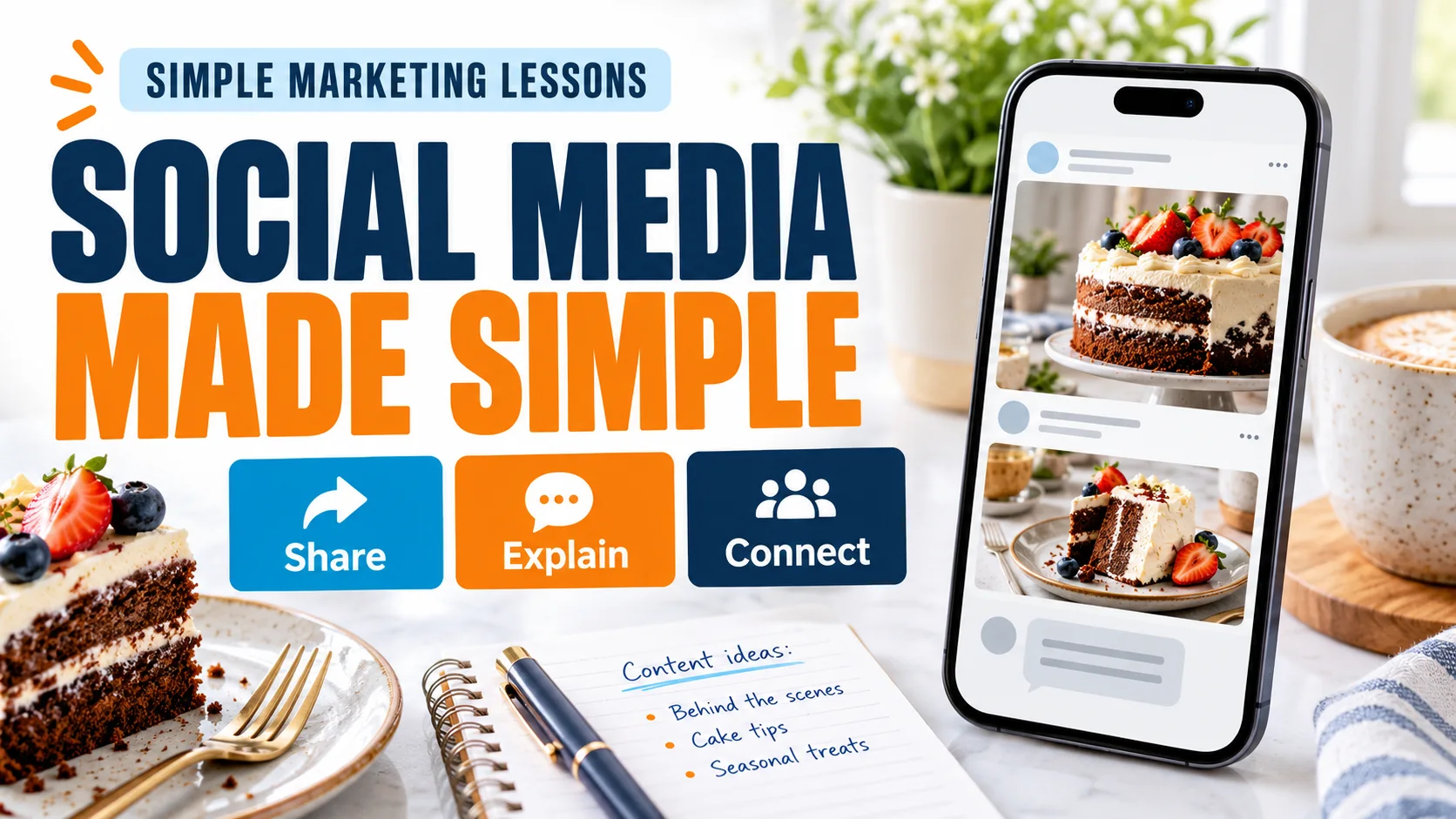
Topics in this lesson
Topic 1 · What it means
What is social media marketing?
Social media marketing means using social platforms to help people learn about a business and connect with it.
Share something useful
A photo, video or short explanation.
Make the offer clear
Help people understand what is available.
Keep in touch
Answer questions and continue the conversation.
A bakery shares a cake photo, explains the sizes it makes and replies when a parent asks about an order. This is a fictional example.
Topic 2 · Who it is for
Start with the people you want to help
A useful post begins with a customer’s need. Think about what they want to understand before buying.
A parent planning a birthday may want designs, sizes and delivery information. A bakery owner buying ingredients has different questions.
Which platform should a business use?
Choose where its customers spend time and what the business can explain well. A photo, short video or detailed post may suit different situations. Being on every platform is not a requirement.
Revisit Understanding your customer if you want a clearer starting point.
Topic 3 · What content does
Give each post a clear job
Content is what a business shares: words, photos, videos or other information. Each post can do a different job.
Tap an example to understand the idea.
A post can help someone notice or understand an offer. The person still decides whether to enquire or buy.
Topic 4 · A useful post
Make the message easy to understand
Show one main idea and the details a person needs. Keep the next step clear.
A relevant photo or video
Show the actual product or useful process. Use original work, or material the business has permission to use.
A simple explanation
Say what is available and who it is for. Avoid claims the business cannot support.
The important details
Include relevant size, location, availability or other conditions. Explain how to get a price when it varies.
A clear next step
For example: “Message us to ask about cake sizes and availability.” Tell people what they can ask.
“Birthday cakes in Madhapur. Choose from the designs shown here. Message us to ask about sizes and availability.”
See Write a clear marketing message for more examples.
Topic 5 · Posting and replies
A conversation continues after the post
People may comment, ask a question or send a message. A helpful reply answers what they actually need.
Be clear
Explain what the business can offer.
Be accurate
Check details before promising something.
Be respectful
Handle personal order details privately.
How often should a business post?
Choose a routine it can maintain with useful content and time to reply. A fixed number of posts does not guarantee results. Review what helps its audience.
Can it use a customer photo or review?
Get permission before sharing someone’s photo or private message. Keep reviews genuine and preserve their meaning.
Topic 6 · Read the results
Look at what people do next
Followers, reactions, visits, enquiries and orders describe different actions. Choose the result that matches the purpose of the post.
Attention
People see or interact with the content.
Interest
Someone visits a page or asks a relevant question.
Business result
An enquiry may lead to a suitable order.
Platforms count views and other actions in different ways. Check what the report means before comparing numbers.
Does a popular post prove business success?
Check whether it reached suitable people and led to useful actions. A large view count alone does not tell you the number of paid orders.
Optional: notice one useful post.
After reading, look at a business post you know. What does it help someone understand? You do not need to publish anything.
Ready to understand planning? Read the content calendar guide and download a weekly plan.