Campaigns and measurement
Learn paid search, paid social, conversion goals, budgets, landing-page alignment, testing and reporting.
 Free demo
Connect websites, search, ads, analytics and AI with practical projects.
Explore the curriculum Explore the main courseExplore the free career assessment, then discuss your learning goals with the team.
Take the free assessmentAsk about the syllabus, trainer, learning mode and available batches before you enrol.
Contact the instituteLearn to connect campaigns with a business goal. Practise Google Ads and Meta Ads planning, conversion tracking, landing-page review and performance analysis with trainer guidance at Impact Digital Marketing Institute.

Review the essentials before choosing a Performance Marketing Course in Hyderabad.
Learn paid search, paid social, conversion goals, budgets, landing-page alignment, testing and reporting.
Build a campaign brief, channel plan, measurement checklist, test plan and performance-review report.
The same specialist fee applies to online and classroom learning. Choose the mode that suits you.
Recordings for one year after completion. Placement assistance for one year from enrolment.
Telugu, English and Hindi learning options · Course Completion Certificate · Relevant third-party certification guidance
Build a working foundation in paid advertising and measurement.
Performance marketing connects marketing activity with measurable actions such as enquiries, purchases or other defined outcomes. The work includes choosing a channel, planning the offer, setting up measurement and reviewing the result against the business goal.
This Performance Marketing Course in Hyderabad brings Google Ads, Meta Ads, landing-page experience and reporting into one learning flow. Start with the customer and desired action. Then practise the campaign structure, message, budget and tracking plan that support it.
For a wider foundation across websites, SEO, content, social media and AI, compare our Digital Marketing Course in Hyderabad. This specialist programme has a focused one-month scope and separate benefits.
Define what a useful conversion means for the business. A click, submitted form and qualified enquiry can represent different stages.
Read the report with its measurement limits. Explain what you observed, what you still need to check and which change to test next.
Basic computer skills, an interest in marketing and time for practice are a useful starting point.
Learn the terms and tasks used in campaign planning and analysis. Prepare sample work you can explain in entry-level marketing interviews.
Connect advertising decisions with measurement. Improve how you review channel performance, conversion quality and test results.
Understand campaign briefs and reporting expectations. Ask better questions about budgets, landing pages and what a reported conversion represents.
Previous campaign experience can help, but it is not required. Tell the institute about your background so you can discuss the right starting point.
Connect each tool and metric with a business question.
Compare search intent with social discovery. Explain how the channel, offer and destination support the customer journey.
Prepare relevant messages and review the page a visitor sees next. Check clarity, mobile usability and the enquiry or purchase step.
Map the important actions and their tracking requirements. Learn validation checks before treating events as reliable evidence.
Understand CPC, CPL, CPA and ROAS in context. Connect platform reports with lead qualification and business costs.
Write a hypothesis, choose a variable and decide what evidence would support the next change.
Use AI to support briefs, copy alternatives and analysis questions. Check the output and keep the business judgement visible.
Our Performance Marketing Course in Hyderabad covers the foundations and practical decisions behind paid media work. Open each module for the topics and output.
Begin with the offer, customer and action that matters. Learn how a funnel connects awareness, consideration and conversion. Distinguish advertising metrics from business outcomes. Discuss the difference between a submitted lead, a qualified lead and a sale before deciding what the campaign should optimise.
Practical output: A brief defining the audience, offer, desired action and success measures.
Research what a relevant customer searches for. Group keywords by intent and connect them with ad groups and suitable landing pages. Explore Search campaign structure, match types, negative keywords and ad copy. Learn to review search terms and prepare a clear pre-launch checklist rather than copying settings without understanding them.
Practical output: A search campaign plan with keyword themes, exclusions and ad-copy drafts.
Understand how a visual offer reaches people through Facebook and Instagram. Connect the business goal with an objective, audience, creative and destination. Explore audience controls, retargeting concepts and lead-generation routes. Review available automation features and explain why the chosen setup fits the offer.
Practical output: A paid social brief with audience, creative and destination recommendations.
Review what happens after someone clicks the ad. Check the heading, offer, supporting information, form and next step. Practise identifying friction on mobile, unclear messages and missing details. Connect the proposed change with a specific question; a design opinion alone does not establish that a page will convert better.
Practical output: A landing-page audit with a prioritised improvement and test plan.
Define the event before choosing a tag. Learn how Google Ads conversion actions, GA4 key events and Google Tag Manager fit into a measurement plan. Understand Meta Pixel, Events Manager and Conversions API concepts. Review testing, duplicate events and diagnostics. Identify where technical implementation or consent requirements need specialist help.
Practical output: An event map and measurement checklist with expected actions and validation steps.
Connect spending decisions with the campaign goal and measurement quality. Understand cost per click, lead, acquisition and reported return on ad spend. Explore automated bidding concepts and their dependence on useful conversion signals. Discuss the difference between revenue and profit, and why a low cost per lead may still produce weak business outcomes.
Practical output: A budget recommendation with assumptions, limits and review criteria.
Learn how to read acquisition, event and advertising reports with context. Understand UTMs, reporting periods and attribution concepts. Discuss why platforms can assign credit differently and why their reported conversions should not simply be added together. Prepare a report that separates observations, limitations and decisions instead of presenting every metric as proof of impact.
Practical output: A reporting outline and dashboard brief with clear definitions and caveats.
Start a test with a question. Compare ad copy, creative, audience or landing-page ideas with a defined hypothesis. Learn the role of A/B testing and the difference between a simple comparison and evidence of incremental impact. Review sample size, time periods and measurement quality before recommending a change.
Practical output: A test plan with the variable, intended outcome and review conditions.
Use AI tools to organise campaign ideas, draft copy alternatives and suggest questions for analysis. Explore platform automation such as Smart Bidding and Advantage+ at a conceptual level. Review recommendations against the business brief. Discuss how a lead can move to a CRM or follow-up workflow without losing information or exposing private data.
Practical output: An AI-assisted draft and a follow-up workflow with documented review checks.
Compare paid search, paid social and display or programmatic concepts by audience, message and measurement needs. Learn where a specialised implementation would be required. Organise your campaign briefs, tracking notes and report into a portfolio. Practise explaining the goal, your contribution, your assumptions and what you would check next.
Practical output: A channel recommendation and a portfolio presentation of your practical outputs.
Platform features and labels change. Lessons use the tools available for the batch. For the wider programme, explore the full digital marketing syllabus.
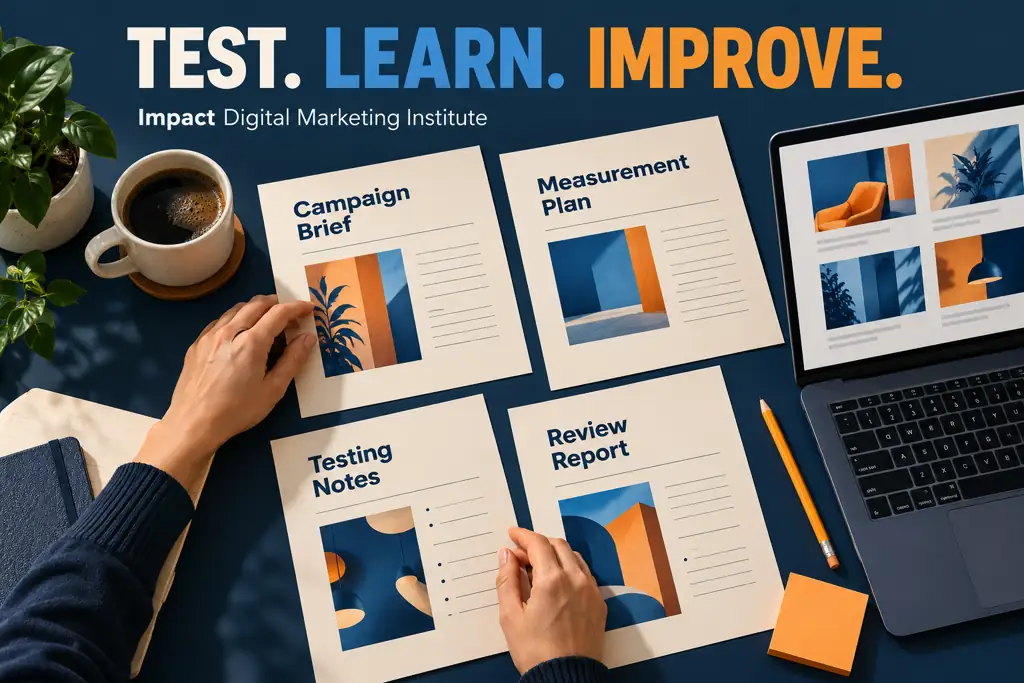
A useful portfolio makes your decisions visible.
The Performance Marketing Course in Hyderabad uses exercises that connect the business brief with campaign planning, tracking and review. Keep the assumptions and feedback with the final work so you can explain how you reached the recommendation.
Keep drafts, feedback and revisions. Explain which work you completed when an exercise was shared.
Exercises do not automatically require live spending. Agree account permissions and any optional practice budget with the trainer before launching.
Label sample data and practice scenarios. Distinguish measured results from forecasts and keep client information private.
Learn to ask what the metric counts and how it connects with the business goal.
Cost per click measures spend against clicks. Cost per lead measures spend against the counted leads. Neither tells you whether the visitor or lead was suitable.
Review the action counted as an acquisition and the denominator used for conversion rate. Inconsistent definitions can make two reports misleading to compare.
Reported return on ad spend compares attributed revenue with ad spend. It does not include every business cost and is not the same as profit or proof of incremental sales.
Understand how the offer, audience and destination affect the plan.
Plan for searches that express a relevant need. Connect keywords, ads and the landing page. For a single-platform focus, explore Google Ads training.
Introduce an offer with relevant audience and creative planning. For deeper paid-social learning, compare Meta Ads training.
Understand inventory, audience, buying-platform and measurement foundations. These are channel-comparison topics; access to specialist buying platforms is not promised.
AI helps with selected tasks. The brief, tracking quality and review still matter.
Use AI for brief structures, copy alternatives and analysis questions. Check the output against the audience, offer and facts.
Explore conversion-focused bidding and campaign automation concepts. Review goals, measurement and available controls before relying on a recommendation.
Use actual data and business context to review changes. Avoid accepting an automated suggestion solely because it appears in the interface.
Official learning: Google Smart Bidding · Meta Advantage+. For broader workflows, compare our AI Digital Marketing Course.
Practical access and demonstration arrangements are explained for your batch.
Connect campaign structure, audiences, messages and performance reports with the plan.
Understand tags, triggers and the checks that connect website activity with measurement.
Explore acquisition, event and attribution concepts when reviewing the customer journey.
Review event sources, testing and diagnostics as part of the tracking workflow.
Organise plans and reports. Use clear definitions and a focused reporting question.
Prepare copy alternatives, creative briefs and review notes without losing the business context.
Advertising spend, platform credits and paid third-party subscriptions are not automatically included in the course fee.
Review trainer profiles and discuss the teaching approach before enrolling.

Rakesh brings digital marketing experience across websites, SEO, content and performance analysis. Connect concepts with practical examples and discuss the decisions behind your work.
Read trainer & author profileView LinkedIn profile
Digital John brings a broader digital marketing perspective. Discuss how paid social campaigns connect with the customer journey and a business’s wider marketing plan.
Explore the trainer profilesDiscuss the course with the instituteChoose online or classroom training with the same specialist course fee.
The Performance Marketing Course in Hyderabad includes practical exercises, an institute Course Completion Certificate and relevant third-party certification guidance. Confirm the preferred mode, language and batch arrangements before enrolling.
Discuss practical account access and any optional practice spending with the trainer. No live client budget is promised as part of the specialist fee.
Same fee online or classroom · One month
Ask about the programme, practical work and enrolment process before joining.
Course completion certificateCampaign planning · Tracking · Testing
Landing pages · Analysis · Reporting
Impact Digital Marketing Institute
Certificate design preview
Earn the institute Course Completion Certificate after fulfilling the course requirements.
Use your campaign plans, measurement checklist and report alongside the certificate. Explain the goal, your role and the reason for each recommendation when presenting your skills.
Relevant third-party certification guidance is included. Google and Meta credentials follow their own requirements and assessments; joining this programme does not automatically award platform certification or imply official partnership.
Explore Google Skillshop · Explore Meta certificationPlacement assistance is available for one year from enrolment.
Practise discussing objectives, channel selection, tracking and reporting. Use your own exercises to support interview answers.
Keep the brief, plan, checklist and review together. Make your contribution clear in your resume, LinkedIn profile and portfolio.
Review feedback and practise beyond the class. Connect campaign tasks with the customer journey and business outcomes.
If you searched for a performance marketing course with placement, understand the offer: placement assistance supports preparation and opportunities. A job, fixed salary or freelance income is not guaranteed. The specialist does not include the main programme’s day-one client projects, unlimited repeat batches or optional internship.
Read about placement assistanceUse the curriculum, public feedback and a conversation with the institute to make your choice.
Explore learner feedback on the institute’s public listing.
Read Justdial reviewsBrowse the gallery and discuss classroom or online learning.
View the galleryCompare the scope with the work you want to understand.
| Programme | Focus | Duration and fee |
|---|---|---|
| Performance Marketing specialist | Channel planning, tracking, landing-page review, testing and reporting. | 1 month · ₹15,000 in either mode. |
| Google Ads or Meta Ads specialist | Focused learning in the chosen advertising platform. | 1 month · ₹15,000 per specialist in either mode. |
| Full digital marketing programme | Website, SEO, content, social media, paid advertising, analytics and AI. | 3 months · ₹19,999 online / ₹24,999 classroom. |
Review the scope, fees, practice and support periods.
The course covers business goals, Google Ads and Meta Ads planning, conversion tracking, landing-page review, campaign economics, analytics, attribution, testing and reporting. Practical exercises connect the campaign brief with measurement and next actions.
The standalone specialist programme costs ₹15,000 for one month in either online or classroom mode. It includes recordings, placement assistance, an institute Course Completion Certificate and relevant third-party certification guidance under the stated periods.
Yes. The programme begins with the business goal, customer journey and campaign basics. Basic computer skills and time for exercises will help. Discuss your background and learning goal with the institute before choosing a batch.
Both modes are available at the same ₹15,000 specialist fee. Classroom training is in Madhapur, Hyderabad. Confirm practical access, preferred mode and batch arrangements before joining.
The institute offers Telugu, English and Hindi learning options. Confirm the language arrangement for your batch before enrolling.
Yes. You study their roles in a channel plan and practise the campaign foundations. For a deeper single-platform focus, compare the separate Google Ads or Meta Ads specialist curriculum.
Yes. You learn event mapping, Google Ads conversions, GA4 key events, Tag Manager, Meta Pixel and Conversions API concepts. Exercises include validation and diagnostic checks; technical implementation needs are discussed for the batch.
Yes. You review message alignment, forms, calls to action and mobile usability. The aim is to propose a clear improvement and test rather than claim a guaranteed increase in conversion rate.
Yes. You learn reporting concepts, UTMs, attribution settings and the limits of comparing platforms. Different reports may count or credit actions differently, so their conversions should not simply be added together.
Yes. You explore AI-assisted briefs, copy alternatives and analysis questions, plus relevant platform automation concepts. You learn to review output and recommendations against the business goal and measurement quality.
Programmatic advertising is covered at a foundation and channel-comparison level. Access to specialist buying platforms, inventory or live buying budgets is not promised. Ask the trainer about the practical scope before enrolling.
Practical learning includes exercises, plans and demonstrations. Any optional live spending needs explicit agreement about account access and budget. Advertising spend and paid tools are separate from the course fee.
Recordings are available for one year after course completion. Placement assistance runs for one year from enrolment, so these periods have different start points.
It includes placement assistance for one year from enrolment. Support helps with preparation and opportunities. Job selection depends on your skills, interviews and employer requirements; employment is not guaranteed.
No. You receive the institute Course Completion Certificate after fulfilling the course requirements. Guidance for relevant third-party certifications is included, but those credentials follow the platform’s own assessment process.
Unlimited repeat batches, day-one client projects and the optional internship are main-programme benefits. They are not included as specialist course benefits.
The platform specialists focus on their respective advertising systems. Performance Marketing connects channel planning with measurement, landing-page review, campaign economics, testing and reporting.
This specialist is one month and focuses on campaigns and measurement. The full programme is three months and includes a wider foundation in websites, SEO, content, social media and AI, with separate fees and benefits. Explore our Digital Marketing Course in Hyderabad.
Arrange a laptop or suitable computer and write down your learning goal. Ask which accounts and tools you will use. You do not need to launch an ad or add a budget before starting.
Use the WhatsApp button or call +91 7416506166. Tell the team your goal, preferred mode and language. Ask about the syllabus, practical work and enrolment process before joining.
Use platform documentation alongside practical exercises.
Learn how website actions fit into Google Ads measurement.
Read the official measurement guideUnderstand how reporting settings affect the credit assigned to key events.
Read the official attribution guideExplore the purpose of A/B tests, creative tests and lift studies.
Explore official testing learningRelated reading: Google Ads vs Meta Ads · AI Digital Marketing Course · Social Media training.
Ask about the Performance Marketing Course in Hyderabad, the next batch and your preferred mode. Understand the programme before deciding to join.
One month · ₹15,000 in either mode · Online or Madhapur, Hyderabad