
What Does Practical Digital Marketing Training Actually Mean?
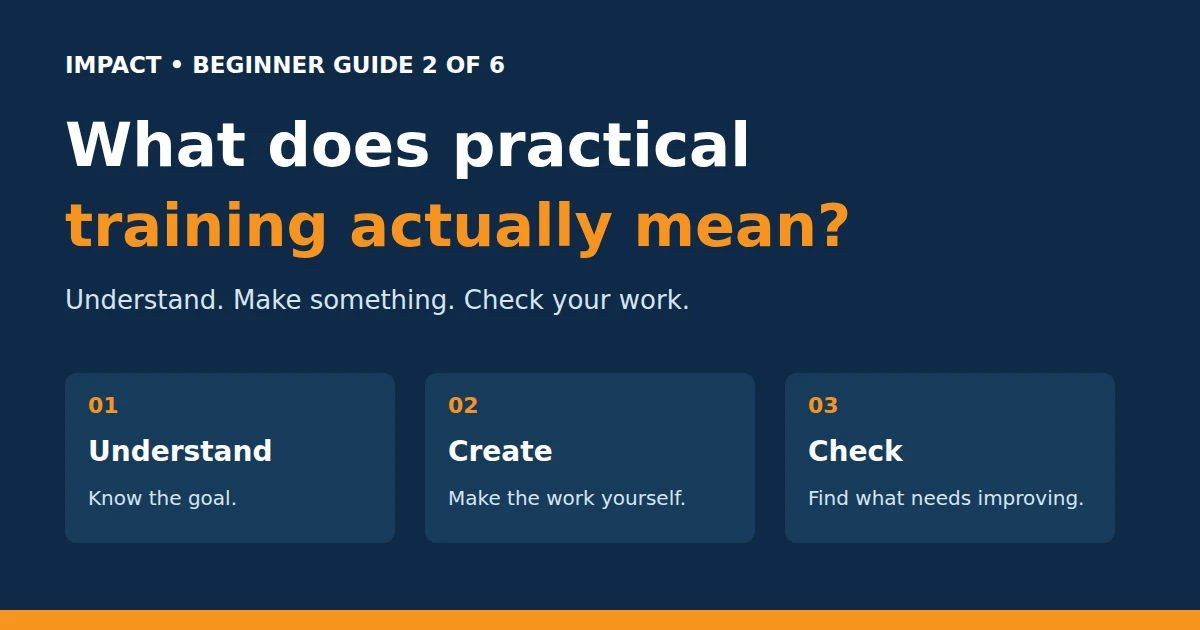
Practical training means using an idea to complete a piece of work, explain your choices and improve it after checking. Watching a tool demonstration is one part of learning.
What changes when you practise?
A trainer can show you how to write a headline. When you practise, you choose an audience, write your own headline and explain why it suits that audience.
This gives you something to discuss and improve. You may understand a demonstration but still get stuck when the business, message or tool changes. Working through that problem is part of learning.
A simple example: a bakery post
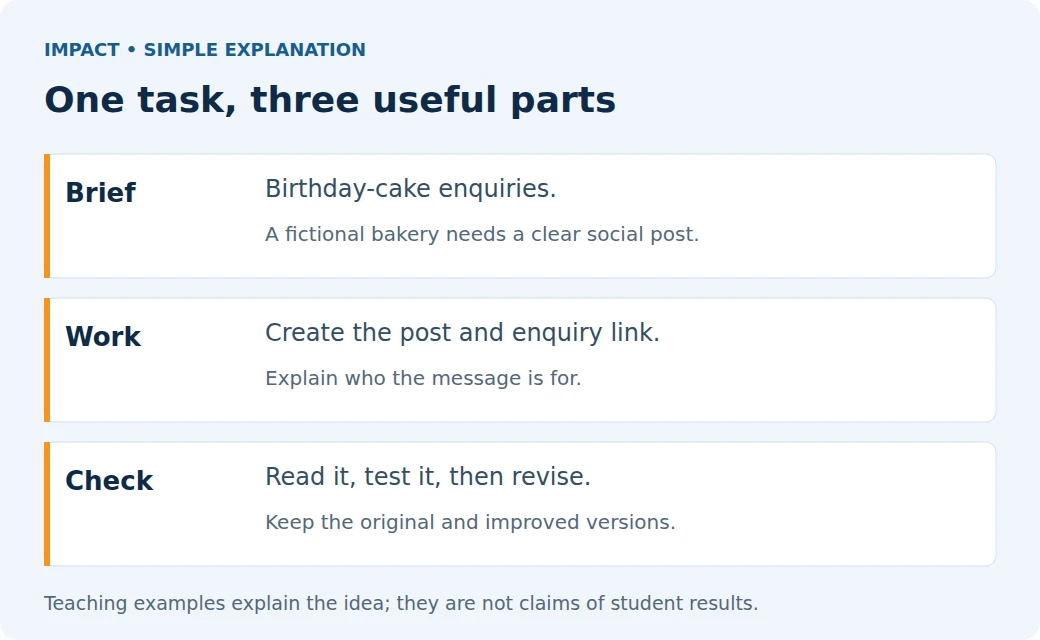
Imagine a bakery wants enquiries about birthday cakes. The customer needs useful details: what is available, how to order and whether delivery covers their area.
A practical piece of work could be a draft social post with a clear message and an enquiry link. The draft should be labelled as a sample. It does not become a successful campaign just because it looks attractive.
What should you be able to show?
Show the brief, the work you made and the reason for your main choices. A brief is a short description of the task, its audience and its goal.
For the bakery example, explain why you included delivery details or chose a cake photograph. If you change the post after feedback, keep both versions and note what improved.
Does practice always need a real client?
A sample project can help you learn without spending a client’s money. Real business work adds responsibilities such as permission, budgets and checking changes before they go live.
Ask whether a course activity is a demonstration, a sample assignment or supervised live work. Also ask which part you will complete yourself. A long list of tool names does not answer those questions.
What should you ask before joining?
Ask to see an example brief and the kind of work a learner is expected to produce. Ask how that work is checked and which projects are included in your batch.
Confirm the arrangement directly rather than assuming every learner gets the same client, account access or advertising budget.
Remember: A useful question: “What will I make myself, and how will it be checked?”
See what the course covers
Compare the syllabus with the kind of practical work you want to learn.
Try a sample brief: Landing page practice project.