
To explain your digital marketing projects in a job interview, tell each one in four parts: the goal, your actions, one result with a number, and one lesson. Keep the whole answer under two minutes. Interviewers are checking whether you did the work and understand why it worked, not whether the project was big.
What should you say when an interviewer asks about your digital marketing projects?

Explain each project in four parts: the goal you were given, the specific actions you took, the measurable result, and the lesson you learned. A project explanation is a short spoken case study, not a task list. Aim for under two minutes and finish with one number the interviewer can remember.
At Impact Digital Marketing Institute, I open every mock interview with one question: “Tell me about a project you are proud of.” Most students answer with a list of tools, such as Canva, Meta Ads Manager and Google Analytics, and then stop. A list of tools tells the interviewer what you opened, not what you achieved.
A digital marketing project is any piece of work with a clear goal, actions you took and a result you can describe, such as a live ad campaign, a website you ranked, a social page you grew or a Google Business Profile you fixed.
Hiring managers want to hear what changed because you were involved. A project answer is strong when the interviewer can repeat your result to their own manager in one sentence. Certificates may earn you the interview, but as explained in what skills actually matter for getting hired, projects carry the conversation once you are in the room.
Many freshers also assume only paid client work counts. Agencies accept internship campaigns, freelance gigs, personal websites and well-documented practice campaigns, as long as you explain your own decisions. The reason certificates alone fall short is covered in why companies do not hire freshers even after certification.
Which digital marketing projects are worth talking about in an interview?
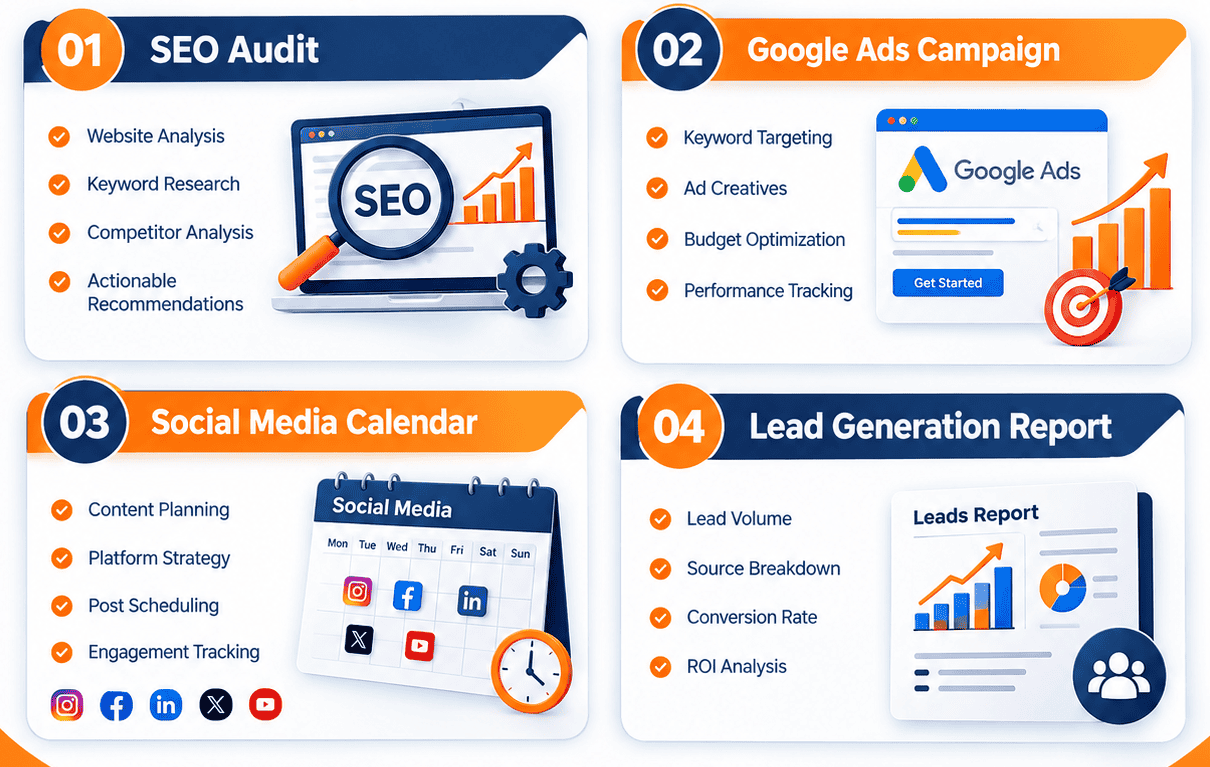
Choose projects where you personally made decisions and can show a before-and-after number. A small real project beats a large project you only watched. Live client work, your own website, a freelance gig, an internship campaign and a carefully run practice campaign all count, if you explain your choices honestly.
Interviewers do not rank projects by size; they rank them by ownership. Ownership means you made decisions, such as choosing an audience, rewriting a headline or pausing an ad set. The silent question behind every project question is “what did you decide, and why?”
The table below shows what interviewers listen for in five common project types, and which number backs each one up.
| Project type | What the interviewer wants to hear | Number to mention |
|---|---|---|
| Live ad campaign (Meta or Google Ads) | Audience choice, budget split, what you paused | Cost per lead or click-through rate |
| SEO on a real website | Keywords chosen, pages fixed, how you tracked progress | Impressions, clicks or position in Google Search Console |
| Social media page | Content mix, posting rhythm, what you stopped doing | Reach, saves or follower growth |
| Email or WhatsApp campaign | Who you sent to, subject lines, send timing | Open rate or reply rate |
| Blog or content project | Search intent, structure, later updates | Organic clicks or time on page |
When to choose each: lead with the row that matches the role you are applying for. An SEO executive interview should start with your website project, and a performance marketer interview should start with your ad campaign.
Illustrative scenario: a 24-year-old commerce graduate runs a ₹6,000 Meta Ads test for a local tuition centre during an internship. She splits the budget across two audiences, pauses the weaker one after four days, and cost per enquiry falls from ₹210 to ₹140. In the interview she says that one sentence, then explains why she paused the audience. The figures are illustrative, not a real student result.
How do you structure a project answer in under two minutes?
Use four steps in order: goal, actions, result, lesson. Spend about 20 seconds on the goal, 50 seconds on your actions, 30 seconds on the result and 20 seconds on the lesson. This keeps the answer under two minutes, which is the length most interviewers can follow without losing attention.
Here is the sequence, with the time each step should take:
- State the goal in one sentence (about 20 seconds). Name who the project was for and what it needed to achieve, for example “bring more enquiries to a coaching centre”.
- Explain two or three key actions (about 50 seconds). Describe the decisions you made, such as the audience you chose or the pages you rewrote, not every task you completed.
- Share one result with a comparison (about 30 seconds). Give the number and what you compared it with, such as “cost per enquiry fell from ₹210 to ₹140”.
- Close with one lesson (about 20 seconds). Say what you would change next time, which shows the interviewer that you learn from your own work.
Knowing the daily work of the role helps you choose which actions to mention. Read what a digital marketer does daily and match your actions to what the hiring team actually values.
How should you handle follow-up questions on a project?
Answer each follow-up in two sentences, then stop talking. Expect questions such as “why did you choose that audience?” and “what would you do differently?” A follow-up question is a sign of interest, not a trap, so answer only what was asked.
If you do not know the answer, say “I did not test that, but I would check it first.” Interviewers trust a clear boundary of knowledge more than a confident guess.
What speaking style works best for a project answer?
Speak the way you would explain the work to a friend. Plain words beat jargon, and an interviewer who cannot follow your acronym cannot credit your skill. Define any term you use, for example “CTR, which is the share of people who clicked after seeing the ad”.
How do you explain results when your numbers are small?
Explain small numbers by giving the comparison, not the size. Say what the figure was before, what it became, and what you changed in between. A rise from 40 to 90 website clicks is a believable result for a new site, while an unexplained tenfold claim usually collapses under a single follow-up question.
A fresher’s numbers are small because budgets and traffic are small, and good interviewers know this. What they check is whether the number is honest and whether you understand why it moved.
Quoting a big percentage on a tiny base, such as “traffic grew 300%”. It happens because most interview guides tell you to make results sound large. The interviewer asks “from what?”, and if the answer is 10 visits, the whole project loses weight. Give the real before and after instead.
What if you have no numbers at all?
Explain your process and the evidence you do have, such as a screenshot, a dashboard view or a client message. State plainly that the campaign ran for a short time, then tell the interviewer what you would measure if you ran it again. To collect real evidence while you learn, read how to build real experience while learning digital marketing.
At Pixel Ranks Media Agency, when we shortlist freshers, the candidate who says “I paused two ad sets because cost per lead was above ₹300 and kept one” beats the candidate with a bigger project and a vague story. In our mock interviews at Impact Digital Marketing Institute, students who prepare one number and one honest mistake per project tend to clear the second round more easily than those who memorise definitions.
— Observation shared by Rakesh Bandari, from Impact batches and Pixel Ranks Media Agency client work.
How do you explain a project that did not work?
Explain a failed project by naming the cause plainly, showing what you measured, and describing the fix you would apply. Interviewers ask about failures to test honesty and learning speed. A calm failure story often earns more trust than a polished success story, because it shows you can diagnose problems.
A failed project is one where the main goal was missed, such as an ad campaign that produced clicks but no enquiries. Use the same four parts as any project answer, but spend more time on the lesson.
In our batches, the most common failed project is a Meta Ads campaign sent to a broad audience with no tracking on the landing page. Students describe it as “the ads did not work”. The accurate version is “I could not tell which ad worked because tracking was missing”, which is a far stronger answer because it shows what you now check first.
Blaming the client, the budget or the algorithm for a failed project. It happens because blame feels safe in the moment. Name the cause you controlled instead, such as missing tracking or a broad audience, and say what you would check first next time.
Failures happen safely inside live practice work, which is why live projects matter in digital marketing training. A mistake made on a small budget becomes a good interview story, while the same mistake on a real salary becomes a problem.
How do you explain a team, freelance or internship project honestly?
Say exactly which part was yours. Use “I” for decisions you made and “we” only for shared results. Interviewers often ask a follow-up about one detail, so a clear boundary protects you. Claiming the whole project is the fastest way to lose credibility on the next question.
The three situations call for slightly different wording:
- Team project: Say “I handled the ad copy and audience setup, and as a team we reached 60 enquiries”, so your part and the shared result are both clear.
- Internship project: Name the type of company, who you reported to, your own tasks and one result you saw, even if the company owned the final report.
- Freelance project: Describe the client’s business goal first, then your actions. If you are still finding first clients, how students can start freelancing after a course explains where to begin.
Describing a group project with “we” in every sentence. It happens because students want to sound humble or protect teammates. The interviewer then cannot tell what you did, so name your role in the first sentence and keep “we” for shared outcomes.
How should you prepare your projects before the interview?
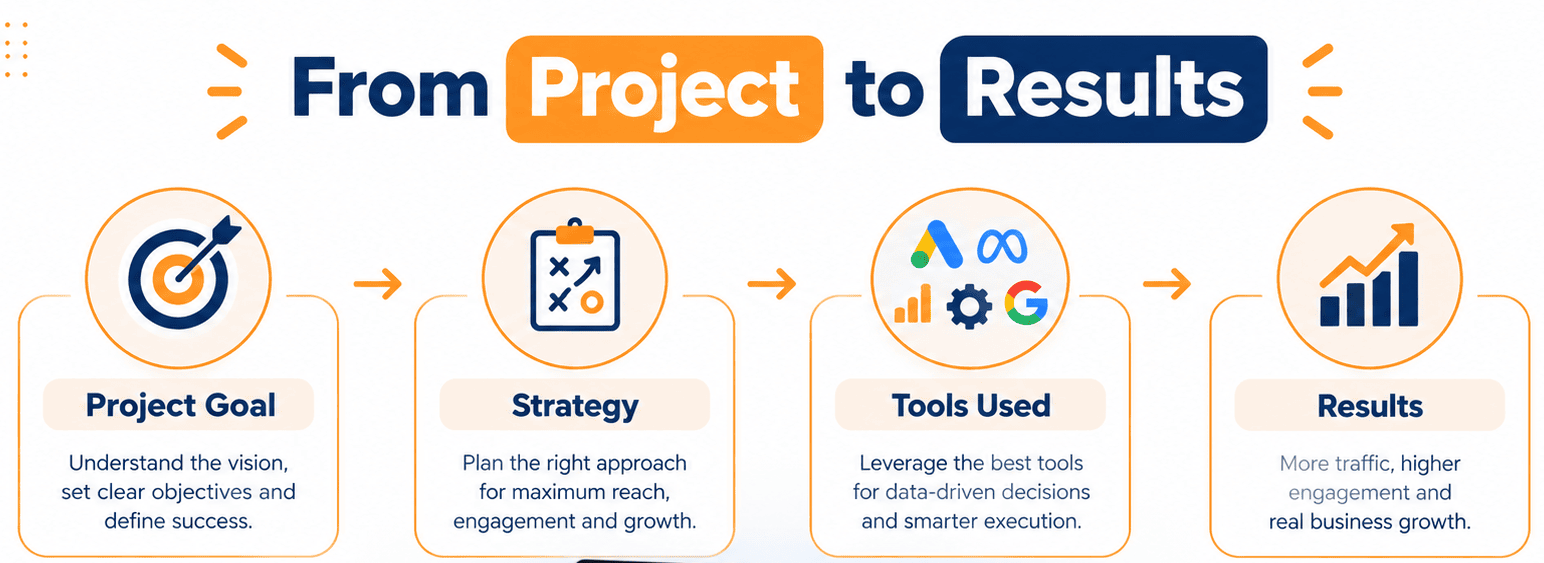
Prepare two projects, not five. Write each as a one-page note covering goal, actions, result and lesson, keep one proof screenshot ready, and practise aloud with a timer. Two well-rehearsed projects let you answer follow-up questions calmly, while five half-prepared ones usually collapse at the second question.
In mock rounds led by Rakesh Bandari at Impact Digital Marketing Institute, students who rehearse aloud twice give clearer answers than students who only write notes. Writing alone hides the pauses and filler words that appear when you speak.
Add the same two projects to your LinkedIn profile so your CV, profile and spoken answer match. Before the interview, read recent candidate experiences for the company on Glassdoor India to see which project questions come up.
If your project list feels thin, you are not alone. The pattern behind weak lists is explained in why certificates alone will not get you a job.
- To explain your digital marketing projects in a job interview, use four parts: goal, actions, result and lesson.
- Choose projects where you made decisions, attach one honest before-and-after number, and name your own role clearly.
- Prepare two projects, keep proof ready, and treat a failed project as a chance to show how you learn.
Frequently asked questions about explaining digital marketing projects
How long should I take to explain a project in an interview?
Short answer: Aim for 90 seconds to two minutes.
That length covers goal, actions, result and lesson without losing the listener. Stop earlier if the interviewer starts asking questions, because a follow-up shows interest and lets the conversation lead the rest.
What if I only have college or practice projects?
Short answer: Present them honestly as practice projects and focus on the decisions you made.
Say clearly that it was a practice campaign, give your result, and explain what you would change on a live budget. Honest reasoning matters more than the label on the project.
Should I show a portfolio during the interview?
Short answer: Yes, if you can open one proof item in under ten seconds.
A single dashboard screenshot, ad report or ranking view backs up your claim. A long portfolio walkthrough eats time, so show one item per project and offer the rest afterwards.
How many projects should I prepare for a digital marketing interview?
Short answer: Prepare two in depth and know a third briefly.
Two projects let you rehearse every follow-up question properly. A third, known in two sentences, gives you a fallback if the interviewer asks about a channel your first two did not cover.
What if I do not remember the exact numbers?
Short answer: Give a rounded range, say it is approximate, and never invent a figure.
Say “around 40 to 50 enquiries” and offer to share the report later. Interviewers forgive rounding but not made-up numbers, which often surface when they ask to see the report.
Can I talk about a digital marketing project that failed?
Short answer: Yes, and it is often your strongest answer when you explain the cause and the fix.
Interviewers use failure questions to test honesty. Name what went wrong, show what you measured, and describe what you would check first next time.
How do I mention tools like GA4 or Meta Ads Manager in my answer?
Short answer: Mention a tool only when you explain the decision it supported.
Say “I used Search Console to find pages with many impressions but few clicks, then rewrote their titles.” The tool proves your method, but the decision and result stay the headline.
What should you read next to prepare for digital marketing interviews?
- A strong project answer has four parts: the goal, your actions, one measured result and one lesson learned.
- Interviewers rank digital marketing projects by ownership, meaning the decisions you personally made, not by budget or size.
- Small numbers are believable when you state the before, the after and the change you made in between.
- A failed project explained with a clear cause and fix shows more skill than a vague success story.
Rakesh Bandari
Founder & Lead Trainer, Impact Digital Marketing Institute
6+ years of hands-on experience · Pixel Ranks Media Agency
Rakesh Bandari, known as Rakesh Ranks, is the founder and lead trainer at Impact Digital Marketing Institute. With over 6 years of hands-on experience in digital marketing, Rakesh has trained students across India, helping freshers, working professionals, and business owners build real careers in the digital space. He specialises in SEO, Google Ads, Meta Ads, Social Media Marketing, Content Strategy, and AI-powered marketing workflows. Impact Digital Marketing Institute maintains a strong placement track record, with training available in Telugu, English, and Hindi — making it one of the most accessible and practical digital marketing institutes for learners across India.
Find Out If Digital Marketing Matches Your Strengths
Answer a few simple questions and see which role fits you best. It takes about 3 minutes and costs nothing.
Get My Career Report