What Skills Do Companies Expect from Digital Marketing Freshers in 2026?
Job descriptions can make a beginner feel they need to know everything. Here is what to learn first, how expectations change by role and what practical work to show in your first interview.
✓ Practical project ideas✓ Expectations by role✓ Clear beginner checklist
Quick Answer
Companies hiring digital marketing freshers in 2026 look for clear writing, basic SEO, social media execution, campaign awareness, analytics, responsible AI use and reliable communication. The depth depends on the role. Show a few completed projects, explain your decisions and be honest about what you have practised. You do not need to be an expert in every channel.
Quick Summary
Best ForFreshers preparing for their first marketing role
LevelBeginner, with role-specific practice
Core SkillsWriting, SEO, social, ads basics and analytics
AI ExpectationClear briefs, checking and human editing
PortfolioA few relevant, complete projects
Next StepChoose a role and build one work sample
1. What do companies actually expect from a fresher?
A fresher should be able to complete small marketing tasks with guidance, check their work and explain why they made a decision. That could mean publishing an article, preparing a content calendar, researching keywords or summarising a campaign report. Strategy ownership and large budgets usually require more experience.
Read a vacancy as a list of tasks, not just a list of tools. If it asks for SEO, content and analytics, identify what you would produce in each area. A role focused on social media may value video editing more than technical SEO. A paid-media internship may place greater weight on spreadsheets and tracking.
Employer examples make this more concrete. Whirlwind’s intern/fresher listing includes research, writing and SEO reporting. Nvelup Consulting’s internship listing spans content, social media, email and analysis. These are examples checked for this guide, not a survey of all employers or confirmation that a vacancy remains open.
For a Hyderabad agency or an in-house marketing team, use the actual job description to prioritise practice. Some employers specify a degree, language or internship commitment. Practical skills support your application but do not replace those stated eligibility requirements.
Key takeaway: Learn the tasks in your target vacancy and prepare evidence for them.
2. Can you write useful content and understand the audience?
Clear writing is a core skill because marketing depends on explaining an offer to a specific person. A fresher should be able to turn a brief into a headline, a caption, a short article or a landing-page section without losing the message.
Identify the audience, their problem and the action you want them to take.
Write a clear headline and opening that answer the reader’s question.
Adapt the same message for a blog, Instagram caption and email.
Check grammar, names, links and factual claims before submitting.
Revise your copy when a manager gives feedback.
Practice example
Choose a fictional local fitness studio. Write one beginner-friendly blog introduction, three social captions and one trial-session landing-page section. Label the work as a sample project. Explain how each piece serves a different stage of the customer journey.
A useful interview answer sounds like this: “I wrote this page for beginners comparing classes. I answered their timing and suitability questions first, then used one clear enquiry button.” That shows more judgement than saying “I am good at content.”
You do not need fancy English. You need accurate, readable language suited to the brand and its audience. If a role requires English client communication, practise explaining your work aloud as well as writing it.
Key takeaway: Show audience-aware writing and explain the purpose of each piece.
3. How much SEO and website knowledge should you have?
Start with search intent, keyword selection, on-page optimisation and basic website publishing. You should know how a helpful page connects a search query to a relevant answer. An entry-level SEO specialist will need more depth than a general marketing intern.
Group keywords by intent rather than placing every related phrase on one page.
Write descriptive titles, headings and meta descriptions.
Add relevant internal links and useful image alt text.
Understand indexing, redirects, canonicals and robots.txt at a basic level.
Use a CMS such as WordPress to format and update a page.
Read Search Console clicks, impressions and query data without treating average position as a complete success measure.
Practise publishing one useful page and documenting what you changed. Check its mobile layout, links and images. Keep screenshots and explain the reason for each edit. A practice page can demonstrate execution even before it earns meaningful search traffic.
For 2026, learn how AI search fits into the same foundation. Google’s AI-search guidance says normal SEO best practices still apply to AI Overviews and AI Mode. There is no special markup that guarantees inclusion. Be cautious about presenting “GEO tricks” as a substitute for useful content and an accessible website.
Prepare common explanations with our SEO interview questions guide. Use it alongside a page you have actually worked on.
Build a working foundation across the main channels, then practise your target role in greater depth.
Key takeaway: One well-explained page is useful proof of SEO and website execution.
4. Can you plan social content and produce basic creatives?
Social media skills include planning, publishing and learning from audience response. Posting attractive designs is one part of the job. You also need to understand the purpose of the post and how it fits the brand.
Build a short calendar with topics, formats, captions and publishing dates.
Create simple, readable designs using a tool you can demonstrate.
Edit a short video with a clear opening, captions and an appropriate call to action.
Check image dimensions, spelling, links and mobile readability.
Draft professional replies to routine questions and flag complaints for a manager.
Explain reach, engagement and clicks in relation to the campaign goal.
Practice example
Prepare a one-week calendar for a fictional café: one awareness video, two product posts, a customer-question post and an offer reminder. Add the target audience and purpose beside each item. You can explain the plan without claiming it generated sales.
Canva or a video editor can help you work faster. Employers will still assess whether the output is readable, consistent and suitable for the audience. Keep your original files so you can show how you made revisions.
Key takeaway: Present a small content plan with usable designs and a reason for each post.
5. What paid advertising basics should a fresher know?
You should understand the link between objective, audience, creative, landing page and measurement. For a beginner, explaining a sensible campaign plan is more useful than promising cheap leads or guaranteed returns.
Distinguish search ads from social-platform advertising.
Choose an objective that matches the business need.
Explain keyword intent, match-type basics and negative keywords for search campaigns.
Connect an ad message to a relevant landing page and enquiry action.
Understand budget limits and the need to verify tracking before interpreting results.
Explain impressions, clicks, CTR, CPC and cost per lead in plain language.
Practice example
Illustrative calculation: a campaign spends ₹2,000, receives 100 clicks and records 10 enquiries. CPC is ₹20, and cost per enquiry is ₹200. If only three enquiries meet the sales team’s qualification criteria, cost per qualified enquiry is about ₹667. These are invented practice numbers, not institute results or a pricing benchmark.
Notice what the numbers do not prove. Enquiries are not automatically customers, and a low cost per enquiry does not establish profitability. Ask about lead quality, attribution and the business outcome before recommending a change.
If you have not run a live campaign, say so. Show a labelled mock campaign plan, an ad-copy set and a tracking checklist. Do not present a simulation as client experience or spend money merely to fill a portfolio.
Key takeaway: Demonstrate campaign logic and honest measurement before claiming performance.
6. Can you read a report and recommend a next step?
Analytics skills mean translating numbers into a useful observation and a sensible action. A fresher should be comfortable with spreadsheets and basic reports, even if they have not built advanced dashboards.
Sort, filter and clean a small dataset in Excel or Google Sheets.
Use simple formulas to calculate rates and compare periods.
Distinguish a user, a session, an event and a business outcome.
Read channel and landing-page reports in GA4.
Understand UTM tags and consistent campaign naming.
State limitations such as small samples, incomplete tracking or different date ranges.
Start with one question: “Which channel brings visitors who complete the enquiry action?” Check comparable periods and the tracking setup. Summarise what you observed, what might explain it and what you would check next. Avoid claiming a campaign caused a change when the report only shows a correlation.
No website data yet? The Google Analytics demo account lets learners explore business data. It has access and export limitations. Identify your work as analysis of demo data, and use reports available to you rather than claiming you managed the store.
Practice example
A useful reporting note: “Paid traffic increased, but enquiries stayed flat. I would first confirm the enquiry event fires correctly, then compare mobile landing-page behaviour and the relevance of the ad message.” It describes a diagnosis, not a guess presented as fact.
Key takeaway: Show that you can connect a metric to a question, a limitation and a next action.
7. What AI skills matter alongside communication and reliability?
Useful AI skill means giving clear instructions, checking output and taking responsibility for the finished work. Familiarity with an AI tool can support a fresher’s workflow, but it does not replace marketing judgement.
Provide the audience, objective, tone and source material in your brief.
Use AI to explore outlines, draft alternatives or organise ideas.
Check statistics, quotations, product details and source links yourself.
Edit generic output into a clear message that fits the brand.
Protect client information and follow the employer’s rules for approved tools.
Explain what you changed and why instead of submitting the first answer unchanged.
Create a short before-and-after sample: the brief, a rough AI-assisted draft, your final version and a note describing corrections. This shows a repeatable editing process. Do not claim to have researched something if you only asked a model for an answer.
Communication is equally practical. A team needs to know what is complete, what is blocked and when you will deliver. Send concise updates, ask focused questions and flag mistakes early. Check the business name, dates, prices and links before anything goes live.
If you are asked a question you cannot answer, use an honest response: “I have not implemented that yet. I understand its purpose, and I would check the official documentation and test it before making a live change.” Then explain the part you do know.
Key takeaway: AI helps with production; judgement, checking and reliable updates make the work usable.
8. What should your fresher portfolio include?
A compact portfolio should show the brief, your work, your reasoning and what you learned. Two or three complete projects are a practical starting target, not a universal employer requirement. Keep them relevant to the role you want.
One small project combining content, website and reporting
For each project, record the audience, objective, tools used, deliverables and your own contribution. Include the final page or file, a few screenshots and a short explanation of what you would improve next. If a teammate did part of the work, credit them.
Use real results only when you have the data and permission to share it. If a project has no live results, explain the process and limitations. Clearly label practice campaigns, fictional brands and demo-data analysis. Never copy someone else’s results into your résumé.
Show the work, explain your contribution and label sample projects honestly.
Practice example
A simple case-study structure: “The brief was to explain a service to beginners. I researched questions, wrote the page, added internal links and checked the mobile layout. The site is new, so I do not yet have enough data to claim a ranking improvement.”
Key takeaway: Make your work easy to review and your contribution easy to understand.
9. How can you prepare without learning everything at once?
Choose one target role, build its core tasks and practise explaining your work. The following four-week plan is an example for organising practice. It is not a promise that every beginner will be job-ready in a month.
Week 1: Read suitable job descriptions, choose a role and practise writing plus one channel’s basics.
Week 2: Build a small website or content project and check each deliverable.
Week 3: Add a campaign plan or report relevant to your target role.
Week 4: Assemble your portfolio, practise interview answers and tailor applications to actual vacancies.
A complete beginner may need longer, while someone who has already practised may move faster. Ask for feedback on specific work: the clarity of your page, the relevance of your keywords or the logic of your report. Revise the project after feedback so you can demonstrate learning.
Before applying, check whether you can explain an audience, write a useful piece, demonstrate a relevant tool, interpret one report and walk through a completed task. These are practice checks, not a hiring score or guarantee.
Common Mistake
Listing every tool on a résumé after watching a tutorial. Replace the long tool list with specific work you can demonstrate: “Published a WordPress article with internal links and checked its mobile layout.”
Certificates can support your learning and may matter to a particular employer. Pair them with work samples. Our guide to practical skills and getting hired explores that approach.
Key takeaway: Build depth in one role and enough awareness to work with the rest of the team.
Certificates, skills and portfolio evidence: what to put in an application
A certificate records learning or an assessment. It does not, on its own, show that you can diagnose a campaign problem, build a useful page or explain a report. Keep relevant certificates on your resume, but put practical evidence alongside them.
Make the evidence specific to the role
SEO: show a keyword map, an on-page audit and the reasoning behind your recommendations.
Paid ads: explain a campaign structure, audience choice, ad variation and measurement plan.
Social media: show a content brief, sample posts and how the content serves the audience and business goal.
Content: include a useful writing sample with sources and a clear explanation of its intended reader.
Analytics: explain what a report says, what it cannot establish and what you would investigate next.
Talk about the work honestly
For each project, describe the brief, your role, the actions you took and the evidence available. State whether it was a classroom exercise, your own site or authorised client work. Do not invent traffic, revenue, spending or placement outcomes to make a project sound more impressive.
Use certificates to support your learning story, then practise explaining your decisions without reading a script. A small, clear portfolio is more useful than a long list of tools you cannot demonstrate.
Frequently asked questions
Do freshers need to know every digital marketing tool?
No. Learn a small set relevant to your target role and be able to demonstrate actual tasks. Broad awareness helps, but expert knowledge of every tool is not a sensible beginner goal.
Can I apply without live advertising experience?
You can apply to roles that accept beginners. Show a clearly labelled campaign plan and explain the basics. Check the vacancy: some positions require prior live campaign experience.
Is coding compulsory for digital marketing freshers?
It depends on the role. Content and social media roles often focus on other skills. Basic HTML and website understanding help with SEO and landing-page work; advanced coding is more relevant to technical specialisms.
Are certificates enough to get hired?
A certificate can support an application and may be requested by an employer. Pair it with relevant projects and clear explanations. Hiring also depends on eligibility, the role and the employer’s assessment.
How can I show analytics skills without client data?
Use the Google Analytics demo account or a clearly labelled sample dataset. Explain what you observed and the limits of the data. Do not present demo work as a client campaign.
How important is English for a fresher?
Read the role’s communication requirements. Clear writing and speaking matter, especially for client-facing roles. Regional-language strengths can also be useful for local audiences. Practise explaining your work in the language the job requires.
Will AI tools make beginners unnecessary?
No one can guarantee how a particular company will staff its team. A practical way to strengthen your application is to combine AI-assisted production with editing, measurement, audience judgement and reliable execution.
Founder & Lead Trainer, Impact Digital Marketing Institute
Rakesh Bandari, known as Rakesh Ranks, is the founder and lead trainer at Impact Digital Marketing Institute. His teaching covers SEO, paid advertising, content, social media and AI-assisted marketing workflows. Explore his profile to learn more about his training approach.
SEO Google Ads Meta Ads Social Media Marketing Content Strategy AI Marketing Workflows
Employer listings and official documentation were checked on 9 October 2026. This guide’s practice tasks and learning plan are editorial suggestions, not a statistical hiring survey. Job availability and requirements can change.
 By
By 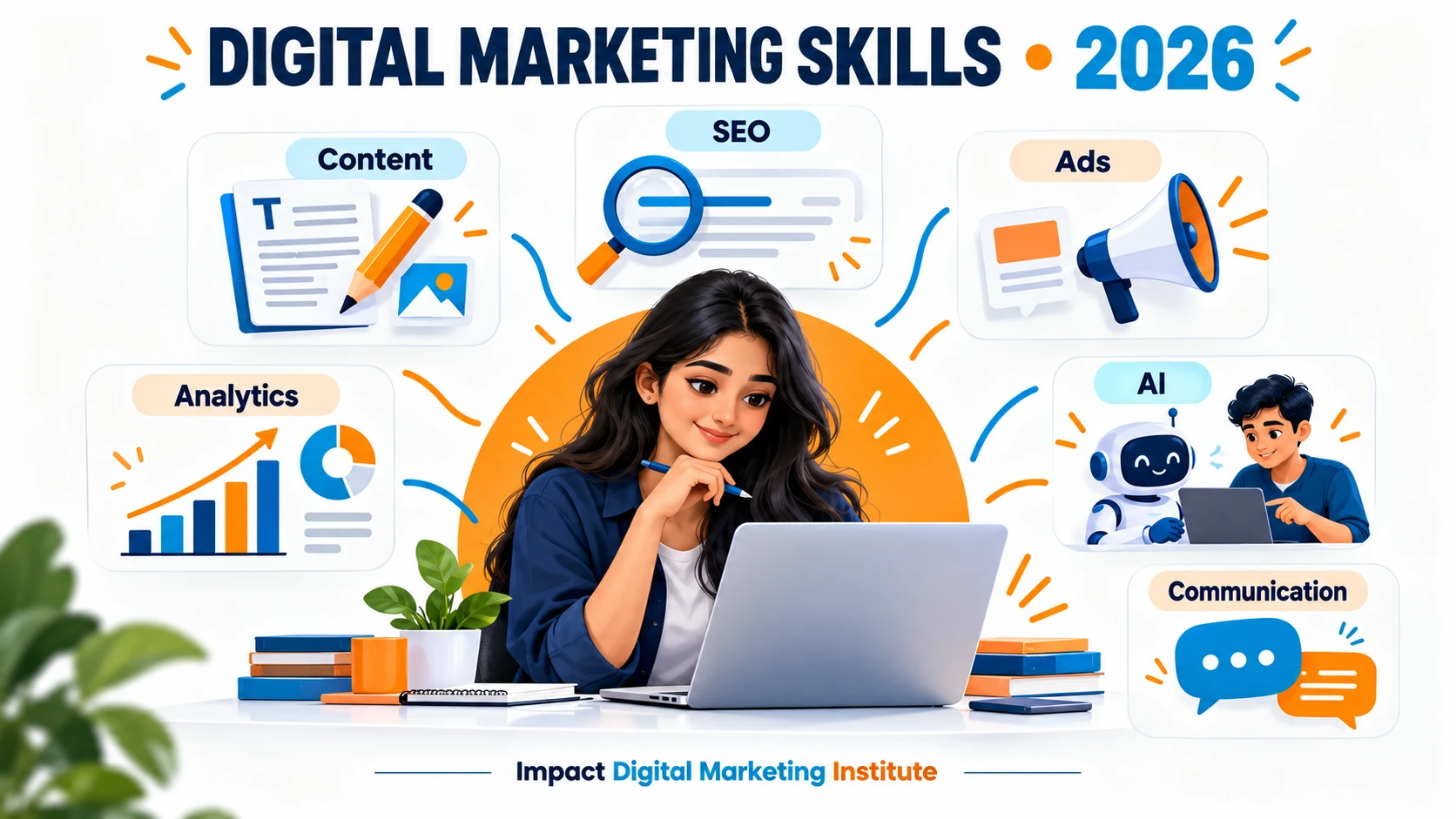

4. Can you plan social content and produce basic creatives?
Social media skills include planning, publishing and learning from audience response. Posting attractive designs is one part of the job. You also need to understand the purpose of the post and how it fits the brand.
Prepare a one-week calendar for a fictional café: one awareness video, two product posts, a customer-question post and an offer reminder. Add the target audience and purpose beside each item. You can explain the plan without claiming it generated sales.
Canva or a video editor can help you work faster. Employers will still assess whether the output is readable, consistent and suitable for the audience. Keep your original files so you can show how you made revisions.